
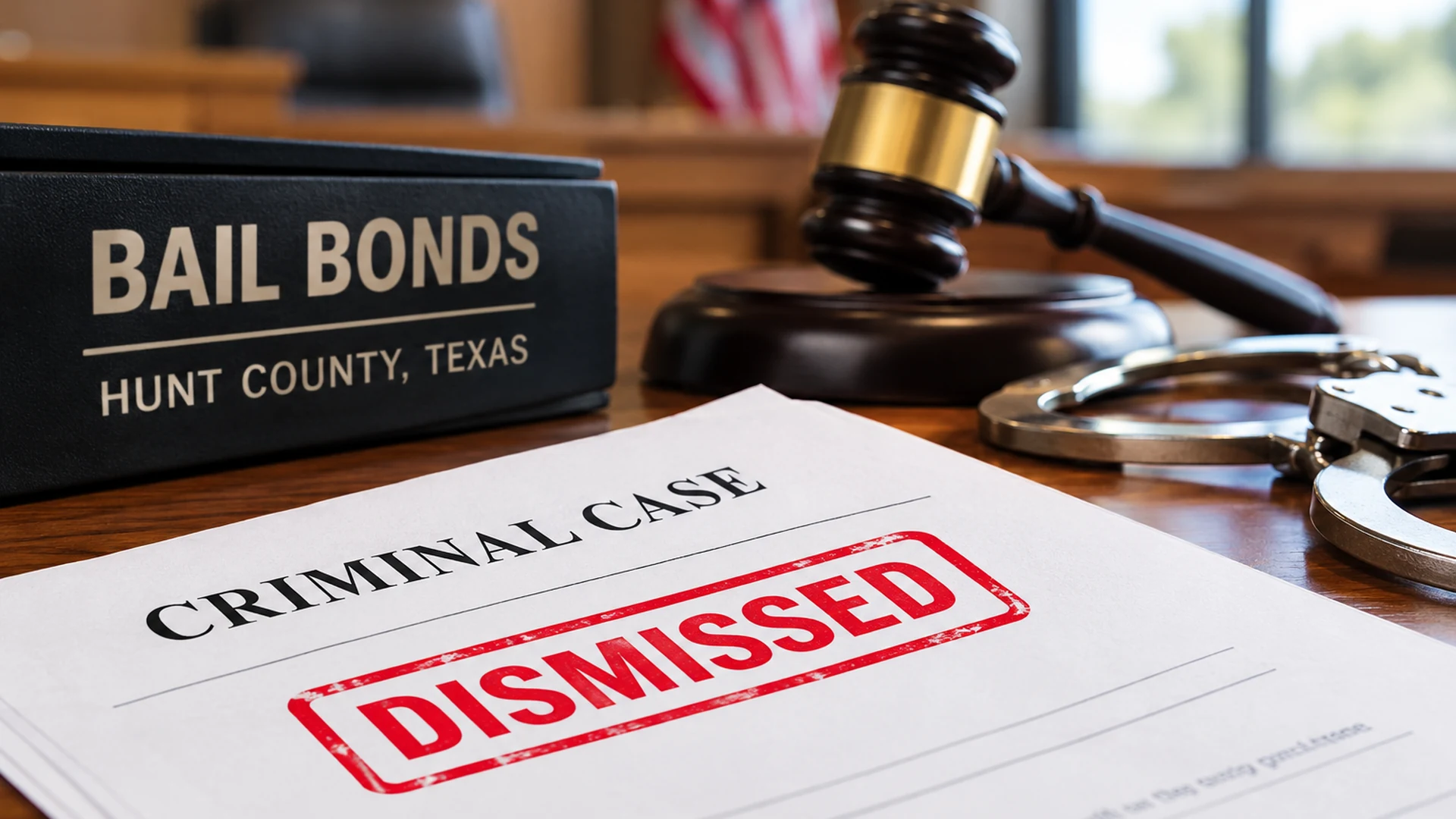
Introduction:
When criminal charges are dropped, defendants and their families often have questions about what happens to the bail bond, whether the defendant must still appear in court, and if any money paid for release can be recovered. These are important concerns for anyone who has arranged bail after an arrest in Greenville or elsewhere in Hunt County, Texas.
In many cases, when a criminal case is formally dismissed, the bail bond associated with that case is discharged. However, the outcome depends on the type of bond, the court’s records, any other pending charges or warrants, and the terms of the agreement with the bail bond company.
Understanding how the process works can help families avoid unnecessary confusion and take the appropriate next steps after a case is dismissed.
What Happens to a Bail Bond When Charges Are Dropped in Texas?
Under Texas law, a surety’s liability on a bail bond ends on the date the criminal case is disposed of. Texas Occupations Code Section 1704.208 specifically identifies dismissal of the case, acquittal, or conviction as a disposition for purposes of the surety’s liability.
This means that when a court formally dismisses the criminal case covered by a bail bond, the bail bond company’s obligation under that bond generally ends as provided by law.
However, it is important to distinguish between a prosecutor deciding not to pursue a charge and a formal dismissal being entered in the court record. Until the case’s status is confirmed, defendants and their families should not assume that all bail obligations have automatically ended.
For someone who has posted bail in Hunt County, confirming the dismissal with the appropriate court is an important first step.
Does a Dismissed Case Mean the Defendant Is Completely Free of Legal Obligations?
Not necessarily. A dismissed criminal charge generally ends the prosecution of that particular case, but it does not automatically resolve every other legal matter involving the defendant.
For example, a person arrested in Greenville may have more than one criminal charge. If one charge is dismissed but another remains active, the defendant may still be required to attend court or comply with release conditions associated with the remaining case.
Other circumstances that may affect release include:
- An outstanding warrant from another court or county.
- A separate criminal case that remains pending.
- A different bond associated with another charge.
- A court order or legal restriction that remains in effect.
For this reason, families should verify the status of each case rather than relying on the dismissal of a single charge.
Will You Get Your Bail Bond Money Back After Charges Are Dropped?
The answer depends on how bail was arranged.
If You Used a Bail Bond Company
When a defendant is released through a licensed bail bond company, the person arranging the bond typically pays a fee in exchange for the company’s services and its guarantee of the defendant’s court appearance.
That fee is generally payment for the bonding service, not a refundable cash deposit held by the court. A case dismissal does not automatically entitle the customer to a refund of the fee.
If you arranged a bail bond in Hunt County, review your written agreement and contact the bonding company to clarify any questions about the fee, collateral, or remaining contractual obligations.
If You Paid a Cash Bond Directly to the Court
A cash bond works differently because money is deposited with the court or the appropriate custodian rather than paid as a fee to a commercial bail bond company.
Texas Code of Criminal Procedure Article 17.02 addresses cash deposited in lieu of sureties and provides for its refund, subject to applicable law and any authorized administrative fee, on court order after the defendant complies with the bond’s conditions.
If the criminal case is dismissed, contact the court handling the case to ask whether a refund order is required and what documentation must be provided.
Do not assume that the money will be returned immediately or automatically. Processing requirements can vary with the type of bond and the court’s procedures.
What Happens to Collateral After a Bail Bond Is Discharged?
Some bail bond agreements involve collateral, such as property or other security, to support the bond. Families sometimes provide collateral when arranging release for a loved one.
When the criminal case is dismissed and the bond is discharged, the next question is whether that collateral can be released.
In Texas, Occupations Code Section 1704.210 addresses the withdrawal of security deposited by a licensed bail bond company. Section 1704.301 also establishes rules concerning the return of security held by a bail bond surety.
The applicable requirements depend on the circumstances, including who owns the collateral, who holds it, and whether any other lawful obligations remain.
If you provided collateral for a bail bond in Greenville or Hunt County, consider taking these steps:
- Obtain confirmation that the criminal case has been formally dismissed.
- Contact the bail bond company and request an update on the bond’s status.
- Review your signed agreement and identify any collateral provisions.
- Ask what documents are needed to arrange the return of your collateral.
- Keep copies of the dismissal paperwork, agreement, receipts, and related communications.
If the return of collateral is delayed or disputed, consider seeking advice from a qualified Texas attorney or contacting the appropriate regulatory authority.
How Can You Confirm That Criminal Charges Have Been Dismissed in Hunt County?
Before making financial arrangements or assuming that a bail bond has ended, confirm the case status through an official source.
If the case was handled in Hunt County, start with the appropriate court or clerk responsible for the criminal case. The correct office may depend on whether the charge was a misdemeanor or felony and which court handled the proceedings.
When contacting the court, have the following information available if possible:
- The defendant’s full legal name.
- The case number.
- The date of arrest or court proceedings.
- The name of the court handling the case.
Ask whether a formal dismissal has been entered and whether any additional court appearances, active cases, or related orders remain outstanding.
If you are unsure which court handled the case, the relevant county or district clerk’s office may be able to direct you to the correct department.
Once the dismissal is confirmed, contact the bail bond company if a commercial bond was used. If cash was deposited directly with the court, ask the court about the applicable refund procedure.
What if Only One of Several Charges Is Dropped?
A person may be arrested on multiple charges arising from the same incident or from separate allegations. In these situations, the dismissal of one charge does not necessarily end the other proceedings.
For example, suppose a defendant in Hunt County is released on a bond for two separate criminal cases. If one case is dismissed while the second remains pending, the bond associated with the dismissed case may be discharged, but the other case may continue under its own bond and court requirements.
The same principle applies when a person has an outstanding warrant or another active case elsewhere.
Always verify which specific case was dismissed and which bond corresponds to that case. This helps prevent misunderstandings about release status, future court dates, and collateral arrangements.
Can Charges Be Refiled After They Are Dropped?
In some circumstances, prosecutors may be legally permitted to bring charges again after a dismissal. Whether that is possible depends on the circumstances of the dismissal, applicable procedural rules, constitutional protections, and other legal considerations.
A dismissal should therefore not automatically be interpreted as a permanent guarantee that no further prosecution can occur.
If charges are refiled, the defendant may face a new court proceeding, and the court may need to address bail under the circumstances of the new case. A previously discharged bond should not be assumed to cover a new charge or proceeding.
Anyone who receives notice of a new criminal case should promptly contact their attorney and verify any new court dates or release requirements.
Why Understanding the Bail Bond Process Matters for Hunt County Families
An arrest can create financial pressure and uncertainty for the entire family. When charges are later dropped, families may understandably expect the situation to be resolved immediately.
Knowing the difference between a bail bond fee, a cash bond, and collateral can help set realistic expectations. It also helps families understand why confirming the court’s records is important before requesting the return of money or property.
For people seeking bail bond information in Greenville, Texas, the most useful approach is to confirm the case status, understand the type of bond that was used, and communicate with the appropriate court or bonding company.
If you need assistance understanding the general bail bond process after an arrest in Hunt County, Not Guilty Bail Bonds can be a starting point for information about the company’s services and the next steps involved in arranging bail.
Need information about bail bonds in Greenville or Hunt County? Visit Not Guilty Bail Bonds to learn more about available services and how to get in touch.
Greenville, Texas · Hunt County
Charges Dropped? Understand What Happens to Your Bail Bond.
When criminal charges are dropped in Hunt County, Texas, the bail bond associated with that case may be discharged once the dismissal is formally entered. However, questions about a bail bond fee refund, cash bond refund, or bail bond collateral return depend on the type of bond, court procedures, and your agreement. Not Guilty Bail Bonds can provide general information about the Greenville, TX bail bond process and help you understand what questions to ask next.
- What happens to a bail bond after charges are dismissed
- Cash bond refund questions in Texas
- Bail bond collateral and agreement information
- Hunt County court and bond status next steps
A dismissed charge does not automatically resolve other active cases or warrants. Confirm the case status with the appropriate court before assuming all release obligations have ended.
Frequently Asked Questions
1. Does a bail bond automatically end when charges are dropped in Hunt County?
Under Texas Occupations Code Section 1704.208, a surety’s liability on a bond ends on the date the case is disposed of, including when it is dismissed. Confirm that the dismissal has been formally entered and that the bond relates to the dismissed case.
2. Can I get my bail bond fee back if the charges are dismissed?
A fee paid to a commercial bail bond company is generally payment for its services and is not automatically refundable when charges are dropped. Review your contract and contact the company about any questions concerning fees or other obligations.
3. How do I get a cash bond refunded in Texas?
Contact the court or the appropriate custodian of the funds to ask about the refund process. Texas law addresses the refund of cash deposited in lieu of sureties, subject to applicable conditions, court orders, and authorized administrative fees.
4. How long does it take to get collateral back after charges are dropped?
The timing depends on the type of security, the applicable legal requirements, and the circumstances of the agreement. Contact the bail bond company, confirm the bond’s status, and ask what documentation is required.
5. What happens if another criminal charge is still pending?
The dismissal of one charge does not necessarily resolve a separate criminal case. Other bonds, warrants, court appearances, and release conditions may remain in effect. Verify the status of every relevant case.
6. Can charges be filed again after a dismissal?
In some circumstances, charges may be refiled, but the answer depends on the applicable law and the details of the dismissal. Consult a qualified criminal defense attorney for advice about a particular case.
7. Who should I contact about a dismissed case in Greenville, Texas?
Contact the court or clerk responsible for the criminal case to confirm the dismissal. For questions about a commercial bail bond agreement, contact the bonding company. If you need advice about your legal rights, speak with a Texas criminal defense attorney.
Final Thoughts
When criminal charges are dropped in Hunt County, the bail bond associated with the dismissed case generally reaches the end of its legal obligation. However, the return of a commercial bond fee, cash deposited with a court, and collateral are separate issues that must be considered according to the type of bond and the applicable rules.
Confirm the dismissal through the appropriate court, check whether any other cases remain active, and contact the relevant bonding company or court about outstanding financial matters.
Understanding these steps can help defendants and their families move forward with greater clarity after a criminal case is dismissed in Greenville or elsewhere in Hunt County, Texas.
Disclaimer: This article provides general educational information about Texas bail bond procedures and is not legal advice. Laws and individual case circumstances can differ. Consult a qualified Texas attorney or the appropriate court for guidance about a specific case.
